Most Frequently Encountered Childhood Epilepsy Syndromes
Epilepsy syndromes in children are diverse, often associated with specific seizure types, developmental challenges, and unique treatment needs.
Epilepsy Syndromes in Children
Epilepsy syndromes are often congenital or begin in early childhood.
Defined by a distinct combination of symptoms or seizure origin in
specific brain regions.
Treatment may include medication, diet therapy, nerve stimulation, or
surgery.
Syndromes vary widely. 'Benign' syndromes see children becoming
seizure-free with age, while 'severe' syndromes involve hard-to-control seizures.
Treatment may include anti-seizure medications, either alone or in
combination, and non-drug options like the ketogenic diet.
Many children with severe epilepsy also face learning and behavioral challenges, requiring
additional support.
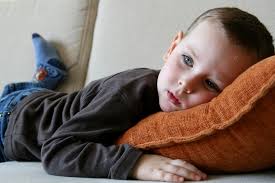
Infantile Spasms (West Syndrome)
- Onset: 3–12 months; typically end by 2–4 years.
- Associated with impaired development.
- Treatment: Steroid therapy, specific anticonvulsants, ketogenic diet.
Doose Syndrome (Myoclonic Astatic Epilepsy)
- Onset: 1–5 years with generalized seizures.
- Includes drop attacks and staring seizures, sometimes leading to falls.
- Treatment: Valproate, levetiracetam, ketogenic diet, modified Atkins diet.

Benign Rolandic Epilepsy (BRE)
- Affects ~15% of children with epilepsy, onset 3–10 years.
- Seizures usually occur at night, brief, child remains conscious.
- Treatment: Levetiracetam or oxcarbazepine may be prescribed.
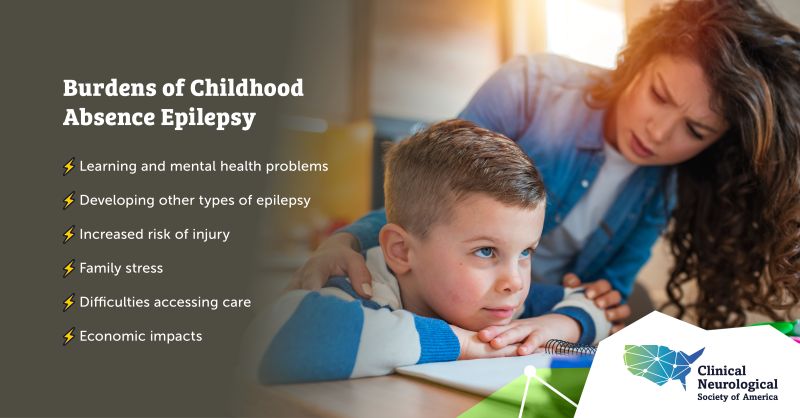
Childhood Absence Epilepsy (CAE)
- Age of Onset: 4 to 10 years
- Characteristics: Frequent, brief absence seizures (up to 100 times/ day). Child may look blank, stare, eyelids flutter, and make repetitive movements.
- Treatment: Medications; may be reduced if seizure-free for two years.
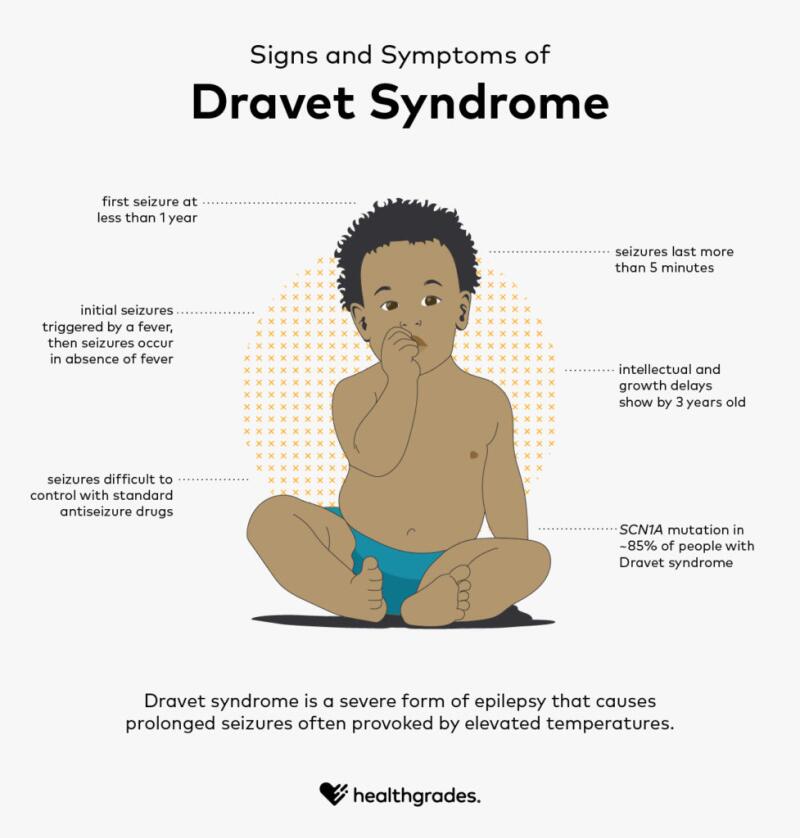
Dravet Syndrome
- Age of Onset: First year of life
- Characteristics: Spontaneous seizures triggered by high temperatures. Behavioral difficulties & lifelong condition.
- Treatment: Specialized care due to treatment-resistant seizures.
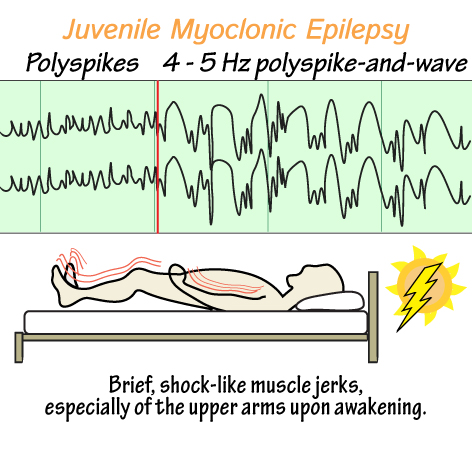
Juvenile Myoclonic Epilepsy (JME)
- Age of Onset: 12 to 18 years
- Characteristics: Myoclonic seizures (brief muscle jerks), tonic-clonic seizures, occasional brief absences. Seizures often occur upon waking, triggered by tiredness, stress, lack of sleep, and photosensitivity.
- Treatment: Lifelong medication.

Lennox-Gastaut Syndrome (LGS)
- Age of Onset: 3 to 5 years
- Characteristics: Multiple seizure types (tonic, atonic, atypical absences), learning difficulties, and behavior problems.
- Treatment: Combination of medications, ketogenic diet, and vagus nerve stimulation.
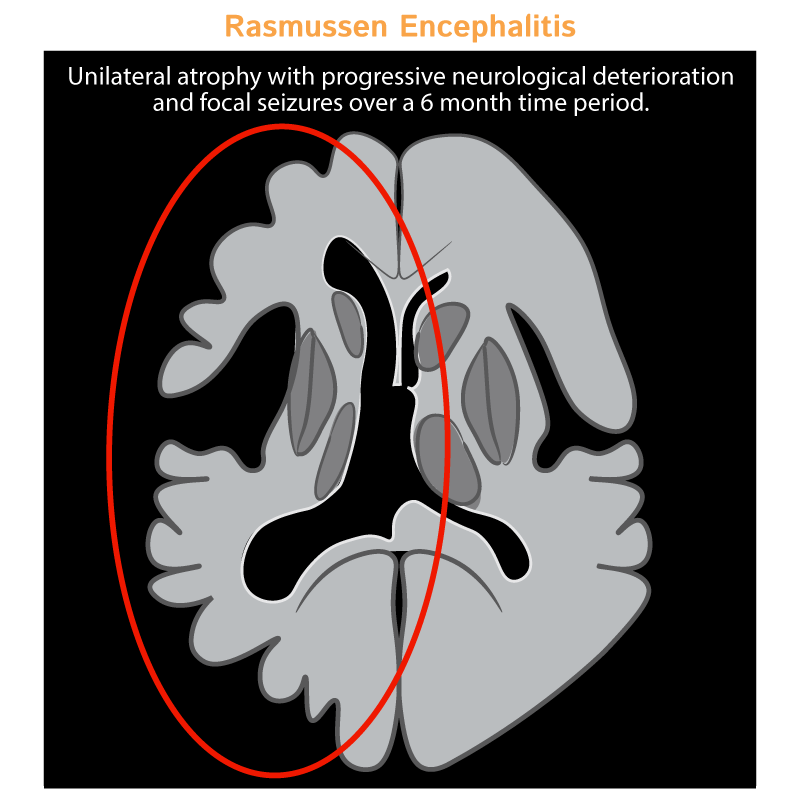
Rasmussen Syndrome
- Age of Onset: 14 months to 14 years
- Characteristics: Autoimmune inflammation of one brain hemisphere. Initial seizures followed by neurological problems within 1-3 years.
- Treatment: Seizures often require epilepsy surgery & Specialist consultation needed.
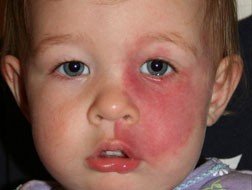
Sturge-Weber Syndrome (SWS)
- Age of Onset: Early childhood
- Characteristics: Neurocutaneous disorder with "port-wine stain" on forehead. Developmental delays & increased eye pressure.
- Treatment: Medications, with varying effectiveness; epilepsy surgery in severe cases.
References
- Epilepsy syndromes in children. Hopkinsmedicine.org. 2024. https://www.hopkinsmedicine.org/health/conditions-and-diseases/epilepsy/epilepsy-syndromes-in-children
- Childhood epilepsy syndromes. Epilepsysociety.org.uk. https://epilepsysociety.org.uk/about-epilepsy/information-parents/childhood-epilepsy-syndromes